



Quick Summary
Guy Fattal marks his birthday with a solo fastpacking trip to Mt. Robson in the Canadian Rockies, deliberately ditching mileage goals and FKTs to slow down, disconnect from his phone, and just be present. Traveling light with an Aero 28 let him move fluidly between hiking and trail running, stopping whenever something caught his eye — a river to swim in, a rock formation to photograph, a stranger to talk to. He comes away with no records or stats, just a renewed intention to leave more space in his daily life for presence, unanswered questions, and simple freedom of movement.
Words and Photos by Guy Fattal @guyfattalphoto
There wasn’t really a big objective behind this trip.
No FKT, no huge mileage goal, no summit I needed to stand on. If anything, the objective was almost the opposite: I wanted to slow things down a little.
Lately I’ve felt somewhat disconnected from some of the things that matter most to me. We live in a time where it’s incredibly easy to fill every quiet moment with something. A phone, a screen, a podcast, work, social media, whatever it is. I’m definitely guilty of it. I’ve found myself reaching for my phone more than I’d like and struggling sometimes to simply sit there and be present with myself and my own thoughts.
I recently heard Novak Djokovic talk about the value of boredom. His point was basically that those quiet moments are often where creativity happens, and where we finally have space to process the things we’ve been suppressing or distracting ourselves from.
That stuck with me.

Over the years, I’ve realized that the mountains are probably the place where I’m best at shutting out some of that noise. It doesn’t necessarily need to be a huge trip. Sometimes it’s a quick trail run after work, a hike, or just getting outside for a few hours. But there’s something about moving through nature that seems to reset the system.
So, with my birthday coming up, I decided to intentionally spend a few days alone in the mountains.
And I really did mean alone.
Most of my best mountain memories have been shared with friends, athletes, and people I care about. Going somewhere alone for several days felt surprisingly uncomfortable. That was also exactly why I wanted to do it.
I wasn’t looking for some grand journey of self-discovery. I just wanted to remove some of the easy distractions and spend a few days being with myself in an environment I love.

TEN HOURS NORTH
I left home in Squamish, British Columbia, and drove roughly ten hours toward Mt. Robson, the highest peak in the Canadian Rockies.
I’d never seen Robson before.
I slept at my truck that night and set off on foot the following morning with everything I needed for the next few days packed into an Aero 28.
I wanted to approach the trip somewhere between backpacking and trail running. Fastpacking made perfect sense.
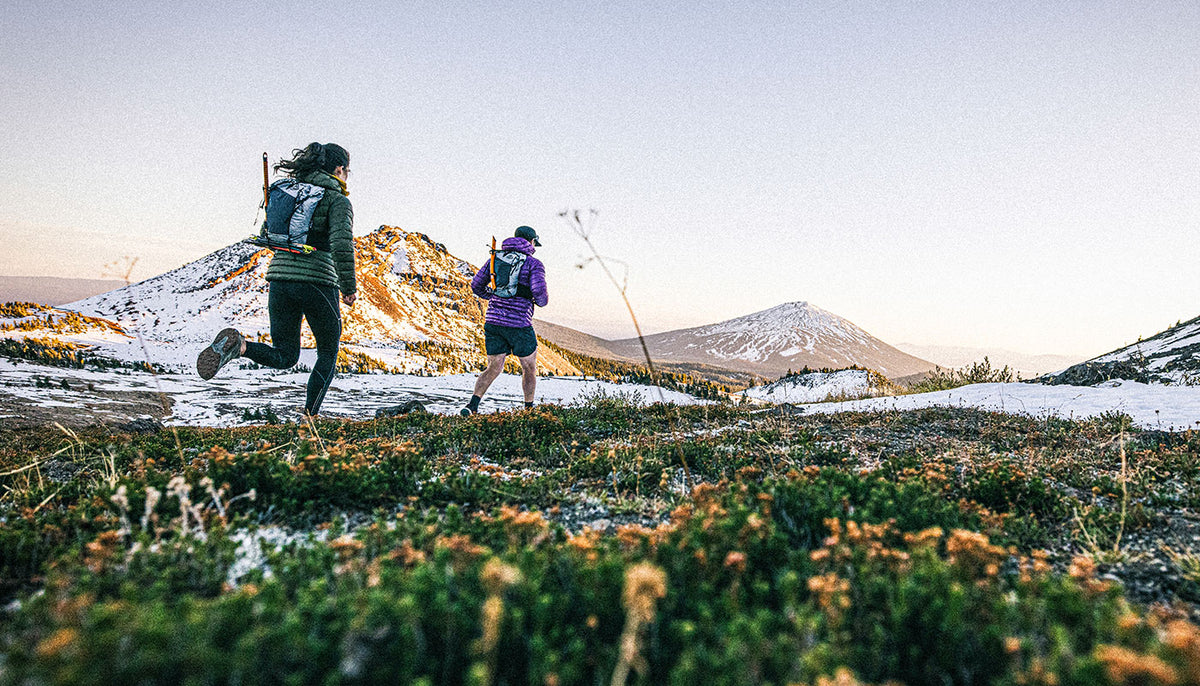
The idea was simple: hike on the climbs, jog the flats and descents whenever it felt good, and stop whenever something made me want to stop.
That last part became pretty important.

We pay so much attention now to mileage, pace, vertical gain, fastest known times, Strava segments, and how quickly somebody completed a route. I love trail running and pushing myself physically, but for this trip I deliberately didn't want any of that to dictate the experience.
If I was running and suddenly wanted to sit beside the river, I sat beside the river.
If some cool rock formation caught my attention, I stopped and photographed it.
If the water looked too good not to jump into, I jumped in.
There was nowhere else I needed to be.
THE PUZZLE
Committing to a 28-liter pack for a multi-day trip does require a little negotiation.
Everything has to earn its place.
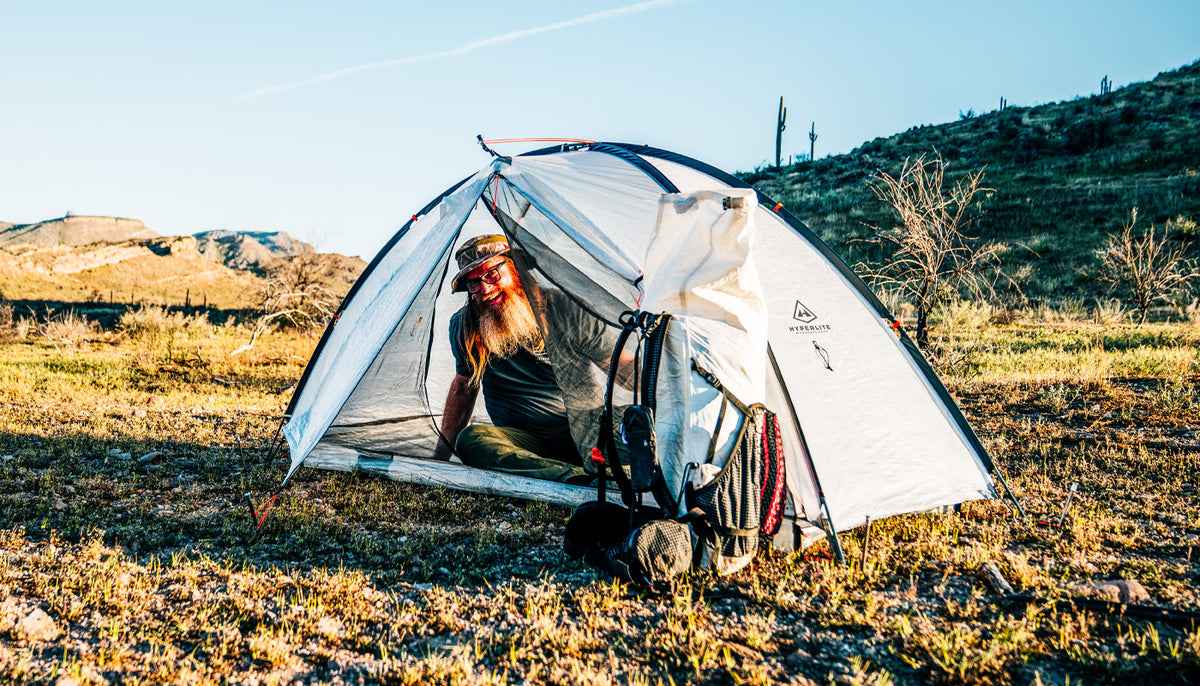
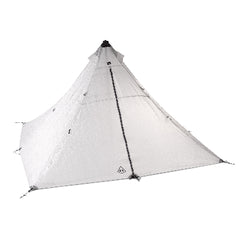
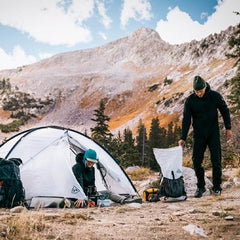
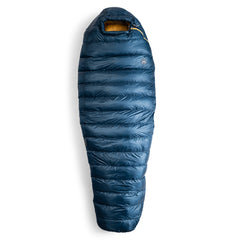
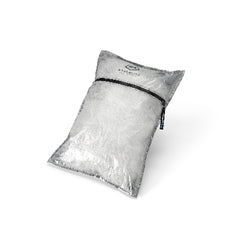
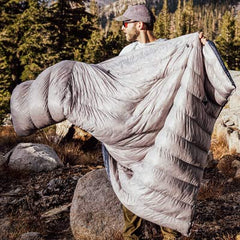
My main setup was the Aero 28, a Mid 1 shelter supported with a single carbon trekking pole, and a 20-Degree quilt. Add a sleeping pad, tiny pillow, warm layers, food, bear spray, a Kindle and my little Fuji camera, and suddenly 28 liters starts looking pretty ambitious.
Then there were the essentials that were considerably harder to justify on a spreadsheet: plenty of good snacks, a tiny airplane-sized bottle of Baileys, and a birthday candle.
Some things are worth the weight.
Packing everything became a bit of a puzzle, but eventually it all found a home. I even made a small clipping system for the front of the Aero so my camera could sit within reach while I moved.
Once everything was loaded, what surprised me most was how well the system actually worked. The vest-style fit kept the load close enough that I could comfortably jog with my full kit rather than feeling like I was running with a backpack bouncing behind me.
That opened up an entirely different way of moving through the trip.

I changed camps every night, but once I reached the Berg Lake area, the campgrounds were only a few miles apart. I'd move camp in the morning, set up my shelter, unload everything I didn't need, and suddenly the same pack became a lightweight trail-running setup.
From there, the rest of the day was mine.
I could head farther up a valley, follow a trail simply because it looked interesting, run for a while, walk for a while, stop for photos, or turn around whenever I felt like it.
For my first proper multi-day commitment to fastpacking, I loved that freedom.
LEAVING QUESTIONS UNANSWERED
Something funny started happening after a while.
Questions would pop into my head, and I couldn't immediately answer them.
Normally, that's barely even something we think about anymore. Wonder about something, pull out the phone. Google it. Ask ChatGPT. Thirty seconds later, question answered.
Out there, I would wonder about a mountain, a rock, an animal, something completely random, and then just–not know.
The thought would hang around for a while.
Sometimes another thought would replace it. Sometimes I'd come up with my own theory.
Sometimes I'd completely forget what the question was.
I loved that.

I listened to some music I'd downloaded, read my Kindle at camp, did some breathwork, jumped into painfully cold water, and ate an unreasonable amount of snacks. This wasn't some digital detox where technology was the enemy. I had a phone, a camera, an inReach, and a Kindle with me.
The difference was that they weren't constantly asking for my attention.
There was suddenly space between things.
And somewhere in those spaces, I started feeling incredibly present.

THE PEOPLE YOU MEET
Ironically, one of my favorite parts about spending the trip alone was talking to other people.
There's an openness on trails that I don't always feel in everyday life.
Some interactions were just a hello while passing. Others became twenty-minute conversations with people whose lives looked completely different from mine.
There were families hiking with their kids, creating memories those kids will probably carry for the rest of their lives. Trail runners moving light and fast on enormous days. Backpackers taking their time.
And there was a 71-year-old man who simply wanted to see Mt. Robson and the Robson Glacier with his own eyes.
I loved that.
The mountains are an incredible equalizer. Everyone arrives with a different story, a different pace, and a different reason for being there, but for a moment we're all sharing the same trail because something about these places matters to us.
Maybe that's why conversations happen so easily.

NO RECORD REQUIRED
This wasn't the biggest trip I've ever done.
It wasn't the longest. It wasn't the hardest. I didn't set any records, and I couldn't tell you my pace for most of it.
But it ended up meaning more to me than I expected.
I spent my birthday beneath Mt. Robson. I trail ran with a nearly empty pack after dropping camp. I swam in freezing rivers. I drank river-cold Baileys. I fully admired the alpine views.
And sometimes I just sat there doing absolutely nothing. That might have been the best part.

Fastpacking gave me a way to move through the landscape that felt completely my own. The lightweight gear made it possible to cover ground quickly when I wanted to, but the point was never really about speed. It was about freedom.
Freedom to move. Freedom to stop. Freedom to change the plan. Freedom to follow whatever caught my attention.
And maybe there's something in that worth carrying back into normal life too.
It's easy to return home and fall straight back into old habits. I certainly have. I'm no guru, and a few days alone in the mountains didn't suddenly give me all the answers.
But I came home wanting to leave a little more space between things.
To reach for my phone a little less.
To occasionally let a question stay unanswered.
To be more intentional about where my attention goes.
And mostly, to be a little more present for whatever is actually happening in front of me.

You don't necessarily need Mt. Robson or a multi-day fastpacking trip to find that. Maybe it's a trail run. Maybe it's sleeping outside for a night. Maybe it's walking somewhere without headphones. Maybe it's simply choosing to spend a little time alone.
But if you haven't done something by yourself in a while, I recommend giving it a shot.
And apparently, a bucket hat and a tiny bottle of Baileys doesn't hurt either.


